Orphanhood
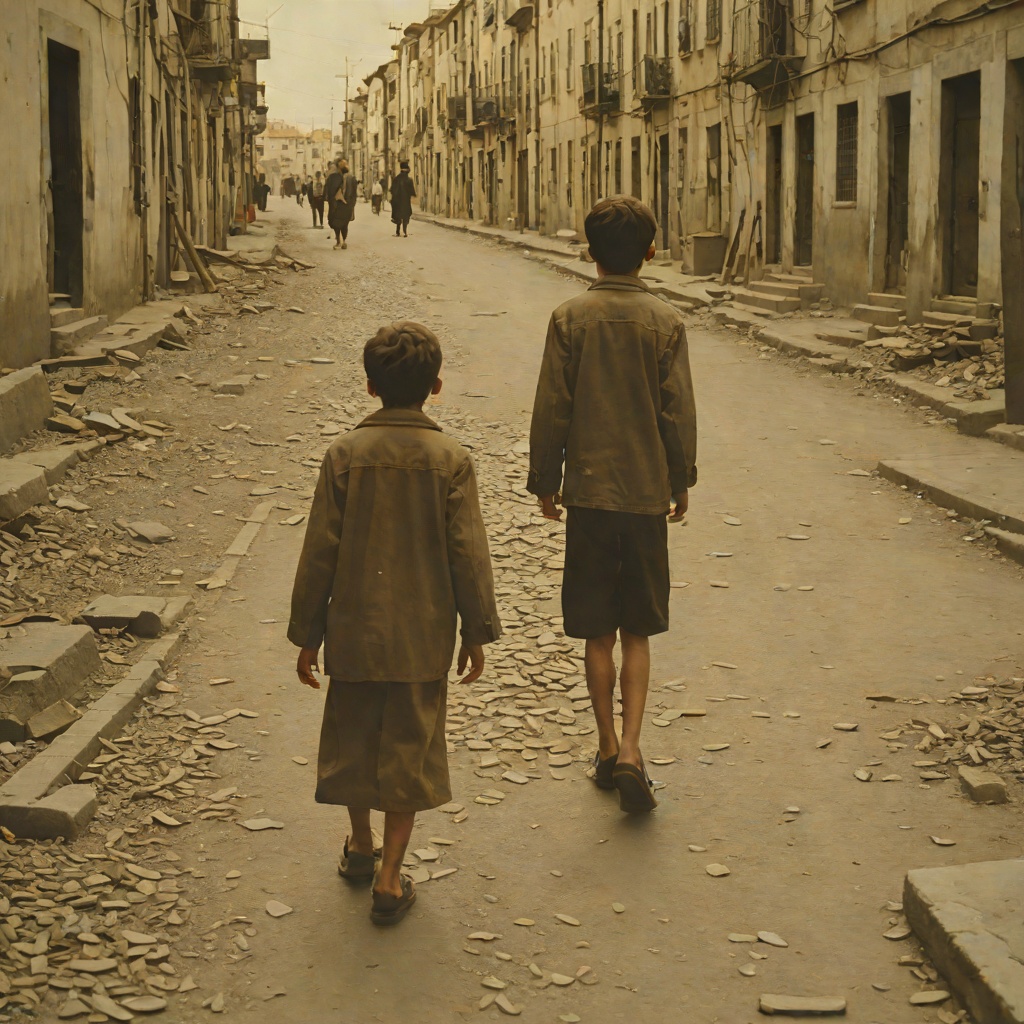
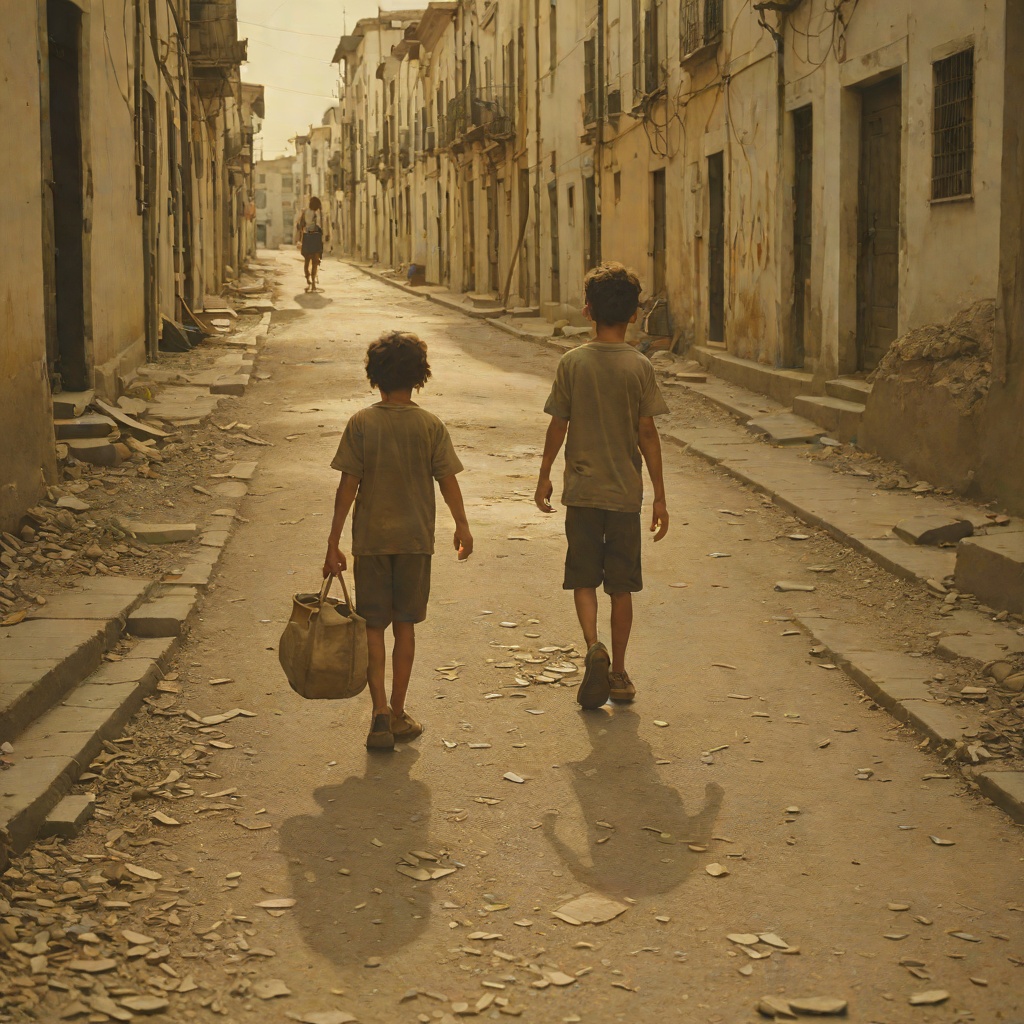
City of GodOrphanhood in City of God is the defining condition of the Kovno Ghetto's children, a state imposed by the Holocaust's machinery of murder yet paradoxically transformed into an identity of responsibility, rank, and desperate hope. It is most fully embodied in Yehoshua, the boy who becomes Sarah Blumenthal's father, whose testimony of his orphaned childhood forms one of the novel's central trauma narratives. The condition is not merely a biographical fact but a collective fate: a covey of orphaned boys, stripped of parents and family, who are gathered into the ghetto's Council Runners and given, in place of a lost childhood, a military-style identity and a burden of adult responsibility. Through Yehoshua's memory, the novel explores how orphanhood is simultaneously a wound of loss, a source of perilous privilege, and a legacy that reaches across generations to shape Sarah's own reckoning with her father's past.
The Orphan's Induction into the Council Runners
Yehoshua's orphanhood is announced abruptly and without ceremony. On the very evening his parents fail to return, Rabbi Grynspan from next door comes to him and says, "Come quickly, you must not stay here. You are technically an orphan, though of course your parents are alive in the forest and will come back for you, may the Lord, Blessed be He, show them the way." The rabbi's words carry a double message: the boy is declared an orphan in the same breath that insists his parents are alive among the partisans. When Yehoshua asks directly, "They went with the Resistance?", the rabbi answers "Yes," but only after a moment's hesitation—a pause that leaves the truth uncertain. The boy is left to wonder whether his parents volunteered for the intelligentsia roundup, whether his mother was implicated, whether they were murdered for reasons having nothing to do with the archive work, or whether they truly escaped to the forest. This unresolved ambiguity becomes the permanent texture of his orphanhood: he is technically an orphan, but the possibility that his parents live in the forest keeps the wound open.
The orphaned boys of the ghetto are gathered into a distinct group. Yehoshua remembers them as "this covey of kings and prophets waiting up in the loft for their assignments"—Joel, the littlest runner; Isaiah; Dov; Micah, who went to work in the city eventually; Daniel; Solomon. Some of these may have been adopted names, just as Yehoshua was the name given to the boy who would become Sarah's father. The names themselves—kings and prophets of Israel—carry the weight of the Jewish parents who left them orphans, a generation's hope invested in these depleted, hungry boys. There was not a great spirit of camaraderie among them, Yehoshua recalls; each had suffered great losses and was depleted in spirit, and they were hungry most of the time. As growing boys they did not have enough to eat, a hunger that would mark their bodies and their memories.
The Runner's Paradoxical Privilege
Within this orphaned brotherhood, Yehoshua's position as a runner gave him a strange and perverted sense of privilege. His job was to carry news and instructions from the council to families in their houses, to carry messages between council members, or to stand watch by the square at the entrance to the bridge, watching for the open car with the half-track filled with soldiers just behind it—the sign that the next bad thing was about to occur. He would run like the wind through back alleys and side streets to give warning. There were seven boys who were runners, and they wore special caps, like police caps with a military brim, with stars sewn on their jackets. Yehoshua felt privileged that his star was not like all the other stars but some indication of rank, and the military-style hat, and knowing what was going on almost before anyone else—all of it made him feel special. Mr. Barbanel, the chief assistant to the community leader Dr. Koenig, said Yehoshua was his best runner, and for the most important matters he chose him. "So there it was, I had a star on my tunic and a garrison cap, and I was the star runner, that's the way I thought of myself." Yet even as he lived in this illusion, sometimes secretly admiring the uniforms of his enemies, he knew full well what was happening. He was only ten years old.
The runner's cap, granted toward the end, was what saved his life—"in more ways than one," as Sarah later reflects. She tells Pem that her father was not appointed a runner like the little Yehoshua of the testimony; it was more happenstance than that, because even before he was orphaned, he made himself useful. He was a little fellow and he could dart about, and the council came to depend on him. The official runner's cap came only toward the end, and it saved his life. The cap and the star, symbols of the enemy's military order, became the instruments of a Jewish boy's survival—a bitter irony that the novel does not soften.
The Archive and the Burden of Witness
Orphanhood in the ghetto is inseparable from the work of documentation. Yehoshua, as Barbanel's best runner, became the confidant of the man who kept the ghetto's secret history. Barbanel wrote down verbatim what he was told or asked the person reporting to write a statement, keeping a diary in which he reported everything that happened: the relevant documentation, the latest regulations, the execution orders, the deaths, minutes of the council meetings, orders signed by the infamous Commandant Schmitz, proscriptions, dicta, identity papers for the work details. He used whatever paper he had on hand—unused student exercise books, for example. Yehoshua could close his eyes and see Barbanel's handwriting, a neat Yiddish like stitches sewn into the page, the characters very small, the words flying off his pen line after line in his passion to say what happened each day, each moment, of their lives as captives. This writing was illegal; the Germans forbade unauthorized writings or photographs and had confiscated all cameras. But as the chief aide to Dr. Koenig, Barbanel had always to be writing something, and it was relatively easy for him to enfold the diary within his formal duties.
Yehoshua understood what Barbanel was doing and asked him one day if he was by profession a historian. Barbanel looked surprised, then smiled and shook his head. "You are one smart kid, Yehoshua," he said. "Yes, I'm a historian, by necessity. But you wouldn't tell anyone, would you." This was a statement, not a question. Yehoshua swore he wouldn't, and they shook hands on it. The orphan boy became the keeper of the historian's secret, bound by a handshake to protect the archive that would outlive them all. Barbanel's diary, by the time Yehoshua was aware of it, must have run into thousands of pages, volumes, a whole trunk full of material. Since neither Barbanel nor Greta Margolin was to survive the destruction of the ghetto, those papers were hidden in the earth of Eastern Europe, in its rubble, in the wreckage and ruination and dust of its Christian tradition. The orphan's testimony is thus doubled: he carries not only his own loss but the burden of a dead historian's record.
The archive itself was hidden with the help of the runners. Barbanel's shortwave radio was kept inside a wall in the attic dormitory over the council offices, and two or three nights a week Barbanel would climb the ladder to the boys' quarters, where they would assist him as he pried open the wall board to expose the radio and plug it in to a socket affixed to their one light fixture. They had several training practices in closing the radio down quickly, and one boy always kept watch at the window while another stationed himself beside the door to listen for any sounds below. The orphaned boys were thus not merely witnesses but active conspirators in the forbidden work of recording and listening—a clandestine education in the moral imperative of memory.
The Legacy Across Generations
Orphanhood does not end with the ghetto; it is transmitted to the next generation as a form of postmemory. Sarah Blumenthal, Yehoshua's daughter, inherits not the experience but the testimony. When she reads her father's account, she is moved by its accuracy even as she notes its incompleteness. "It may be inaccurate, but it's quite true," she says. "I don't know how, but you caught my father's voice." She recognizes the gaps—the black market in vodka, the heavy drinkers who were a danger to the whole community, the obsession with soap that was as crucial as food—and she supplies them from her own family memory. Her father, she explains, was not appointed a runner like the little Yehoshua of the testimony; it was more happenstance than that. The testimony and the family memory diverge and converge, two versions of the same orphanhood.
The recovery of the archive brings the orphan's legacy to its fullest material form. When the chest is opened in the International Arrivals Building at JFK Airport, Sarah watches as the customs man pries off the hasps, and the sound of the splitting wood makes her wince—"as if her father's history is seeping into the room." The inspectors lift out packages wrapped in oilskin, with an oilskin lining against the inner sides of the chest, "the fierce preservation of these materials" unmistakable and, to Sarah, itself an urgent message that brings a sob to her throat. Inside are sheaves of paper bound in twine, booklets, manuals, folders, rolled-up blueprints, diagrams, stapled documents, envelopes of various sizes, each labeled in a small, neat Yiddish script. Among them is a diary in one increasingly familiar hand covering three years, 1941 to the date in 1944 when the ghetto is dismantled and the survivors are marched to the railroad station, along with reams of documentation, rules and regulations issued by the Germans, innumerable orders with the signature of Commandant Schmitz.
And then Pem hands Sarah an envelope of forbidden little black-and-white photos: a line of men and women marching to work behind barbed wire; a husband and wife and their child on a bench having their picture taken, the cloth stars sewn to their coats; a woman on her knees in the vegetable garden; the members of the council posing in business suits with stars; a body in a business suit hanging from a gallows, the head awry, staring heavenward; winter, snow on the ground. And here, seven little boys in front of a wood cabin, standing at their idea of attention on the steps, wearing military-school caps and stars on their breasts that might possibly be imagined as insignia of their office as runners for the council. Unsmiling little boys, one with shoulders hunched up in the instinctive posture of self-protection, or perhaps he is cold; they are all underdressed, with short pants and sweaters and jackets they have outgrown. Each of them at attention, feet together, arms pressed against his sides, looking into the camera in the full knowledge of death. Sarah finds her father in the first row. The orphaned boy, the star runner, is there in the photograph—a face among faces, a child among children, fixed forever in the full knowledge of death. The orphanhood that began with a rabbi's ambiguous announcement is completed in this image: the boy who was technically an orphan, whose parents might have been alive in the forest, is now permanently a child of the ghetto, his identity sealed by the camera's flash and by his daughter's recognition.